Who Has Won the Most Trophies With Arsenal?
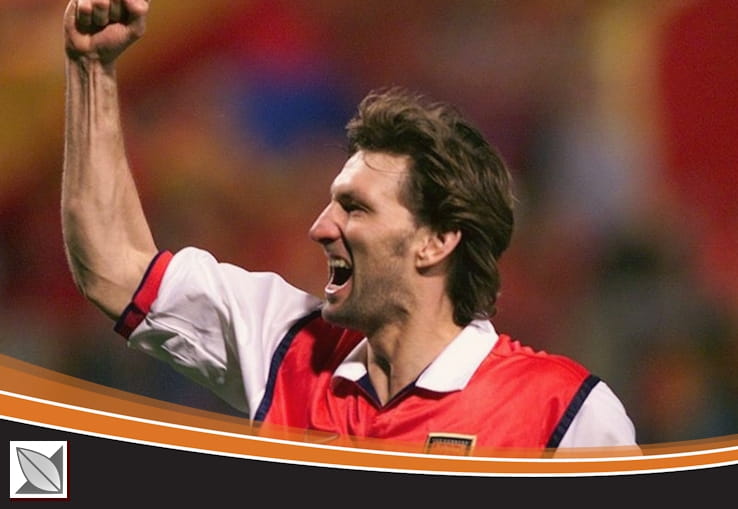
Arsenal are one of the most successful clubs in English football history, with generations of legendary players helping the Gunners collect major domestic and European honours. From the great teams of Herbert Chapman to Arsène Wenger's title winners, Arsenal's history has featured players such as Thierry Henry, Dennis Bergkamp, Patrick Vieira, Ian Wright and David Seaman. However, when looking at major competitive trophies won as an Arsenal player, one name stands out above the modern legends: Tony Adams. The iconic defender won 10 major trophies with Arsenal, including 4 league championships, 3 FA Cups, 2 League Cups and the European Cup Winners' Cup.
Tony Adams: Arsenal's Most Decorated Modern Legend
Tony Adams spent his entire senior playing career with Arsenal. After making his first-team debut as a teenager in 1983, he remained at the club until his retirement in 2002. His extraordinary longevity meant that he experienced several distinct eras at Arsenal while remaining an important figure throughout them.
Adams was not simply present for Arsenal's success. He became the club captain at just 21 years old and developed into the defensive leader around whom several championship-winning teams were constructed. His 10 major trophies provide a remarkable summary of a career that lasted almost 2 decades.
The 4 League Titles
Perhaps the most impressive element of Adams' trophy collection is his 4 English league championships. He won the First Division in 1988-89 and 1990-91 before adding Premier League titles in 1997-98 and 2001-02.
Those championships demonstrate his extraordinary longevity because they were achieved under different managers and with very different Arsenal teams. His first league title came under George Graham, while his final 2 arrived during Arsène Wenger's transformation of the club.
The Dramatic 1988-89 Championship
Adams' first league championship came in one of the most dramatic finishes in English football history. Arsenal travelled to Anfield for the final league match of the 1988-89 season needing to defeat Liverpool by 2 goals to win the title.
Arsenal achieved exactly that, winning 2-0 after Michael Thomas scored deep into the closing stages. For Adams, still in the early years of his captaincy, it was the first major league triumph of a career that would eventually span championship-winning teams across 3 different decades.
Champions Again in 1990-91
Arsenal returned to the top just 2 seasons later. The 1990-91 side was particularly impressive defensively and lost only once during the entire league campaign.
Adams was central to that defensive strength. Alongside players such as Lee Dixon, Steve Bould and Nigel Winterburn, he formed the foundation of one of the most famous defensive units in English football.
The Wenger Revolution
By the time Arsène Wenger arrived at Arsenal in 1996, Adams was already an established club legend. However, Wenger's methods helped extend the careers of several experienced Arsenal players and introduced a completely different football philosophy.
Rather than being replaced by the new generation, Adams adapted. He became an important bridge between George Graham's defensively disciplined Arsenal and Wenger's more expansive, technically ambitious team.
The result was another extraordinary period of success.
The 1997-98 Double
Arsenal won both the Premier League and FA Cup in 1997-98, giving Adams his third league championship and second FA Cup. It was Wenger's first full season in charge and provided clear evidence that Arsenal were becoming a serious rival to Manchester United.
One of the defining images of the season came when Adams scored against Everton in the match that confirmed Arsenal as Premier League champions. The centre-back surged forward, controlled Steve Bould's pass and finished emphatically before celebrating with his arms raised.
The moment became one of the most recognizable images of Wenger's early Arsenal era.
Three FA Cup Victories
Adams won the FA Cup 3 times with Arsenal, in 1993, 1998 and 2002. The first formed part of an unusual domestic cup double, as Arsenal won both the FA Cup and League Cup during the 1992-93 season.
His second came alongside the 1997-98 Premier League championship, completing Wenger's first Double. His third arrived in his final season, when Arsenal defeated Chelsea in the 2002 FA Cup final.
Winning the competition across such a long period again demonstrates how Adams remained relevant through multiple generations of Arsenal teams.
Two League Cups
Adams also collected 2 League Cup winners' medals. Arsenal defeated Liverpool in the 1987 final, giving the young defender one of his earliest major honours.
Six years later, Arsenal won the competition again by beating Sheffield Wednesday in the 1993 final. That season became particularly memorable because Arsenal subsequently defeated the same opposition in the FA Cup final, completing the domestic cup double.
European Glory in 1994
Adams' collection also includes one of the most significant trophies in Arsenal's European history: the 1993-94 European Cup Winners' Cup.
Arsenal faced Parma in the final in Copenhagen. The Italian club entered the match with an outstanding team featuring several highly regarded players, but Arsenal produced a disciplined performance and won 1-0 through an Alan Smith goal.
For Adams, lifting a European trophy as Arsenal captain represented another major milestone. European silverware has historically been much rarer for Arsenal than domestic success, making the Cup Winners' Cup an especially important part of his legacy.
The Final League Title in 2001-02
Adams' final season provided an almost perfect conclusion to his Arsenal career. The Gunners completed another Premier League and FA Cup Double in 2001-02.
Although injuries restricted his appearances, Adams remained Arsenal's captain and contributed to a squad featuring a new generation of stars such as Thierry Henry, Robert Pirès, Patrick Vieira and Freddie Ljungberg.
Arsenal secured the league championship with a victory at Old Trafford, completing Adams' extraordinary collection of 4 league titles. He retired after the season, ending his career as a champion.
What About the Community Shield?
The exact number of trophies attributed to a player can vary depending on whether competitions such as the FA Charity Shield or Community Shield are included. When counting the traditional major competitive honours, Adams won 10 with Arsenal: 4 league titles, 3 FA Cups, 2 League Cups and 1 European Cup Winners' Cup.
He was also part of Arsenal teams that won Charity Shields. Including those honours increases his overall silverware count, but separating major trophies from super-cup-style competitions provides a clearer comparison when discussing the most successful Arsenal players.
How Does Thierry Henry Compare?
Thierry Henry is widely considered one of the greatest players ever to represent Arsenal, but his trophy collection does not match Adams' total. Henry won 2 Premier League titles and 3 FA Cups during his Arsenal career, as well as Community Shields.
His individual impact was extraordinary, and he remains Arsenal's all-time leading goalscorer. However, Adams' much longer career at the club gave him the opportunity to contribute to successful Arsenal teams across several different eras.
Dennis Bergkamp and Patrick Vieira
Dennis Bergkamp and Patrick Vieira were also central to Wenger's greatest Arsenal teams. Both accumulated significant domestic silverware and helped transform the Gunners into one of Europe's leading clubs.
They were crucial to the Doubles of 1998 and 2002 and later formed part of the famous Invincibles squad that completed the 2003-04 Premier League season without losing a match.
Yet Adams' success began almost a decade before either player arrived in north London, giving him a unique trophy record that connects 2 major periods in Arsenal history.
Why Tony Adams Is Known as "Mr Arsenal"
The trophies tell only part of the story. Adams joined Arsenal as a youngster, progressed through the club's system, became captain and never represented another senior club. He accumulated hundreds of appearances and remained associated with Arsenal throughout his entire professional playing career.
Most remarkably, Adams was part of league championship-winning Arsenal teams in the 1980s, 1990s and 2000s. Few players in English football history have remained so closely connected to one club while experiencing success across such a long period.
His leadership was equally important. Adams captained teams with very different personalities and tactical identities, from the disciplined sides of George Graham to the technically gifted teams created by Wenger.
A Trophy Collection That Spans Generations
Adams' 10 major trophies tell the story of Arsenal's evolution. His first League Cup arrived in 1987, while his final league and FA Cup triumphs came in 2002. That 15-year span between his first and last major trophies is an extraordinary achievement for an outfield player.
During that period, English football itself changed dramatically. The old First Division became the Premier League, television transformed the finances of the sport, international stars increasingly arrived in England and Arsenal eventually evolved into one of the most cosmopolitan teams in Europe.
Through all of those changes, Adams remained Arsenal's captain and defensive reference point.
Conclusion
Tony Adams stands as one of the most decorated players in Arsenal history and the defining answer when major trophies are used as the measure. He won 10 major honours with the Gunners: 4 English league titles, 3 FA Cups, 2 League Cups and 1 European Cup Winners' Cup. More importantly, those trophies were collected across different generations, managers and styles of football. From the dramatic 1989 championship at Anfield to Arsène Wenger's Double winners of 2002, Adams was present for some of the greatest moments in Arsenal history. His extraordinary longevity, leadership and loyalty explain why, long after his retirement, the nickname "Mr Arsenal" still feels entirely appropriate.